Restaurant demand and social media: a four-week field guide
JAMIE ALEXANDER
Director - Partner
8 min read
/
October 25, 2026
Growth Lab field guide
A simple way to turn the next month of content, paid social and bookings into one plan. Pick the service that needs to move, give guests a real reason to come in, then use what happens to make next month better.
If you start the month asking ‘what should we post?’, you'll end it with a nicer-looking grid and the same trading problem.
Start somewhere more useful. Name the service, the audience or the behaviour that needs to move. A dead Wednesday dinner. Group bookings for the run into Christmas. A new lunch offer. A bar that does great weekends and never sees anyone twice. A venue that has changed and the locals haven't caught up.
That isn't a limit on the creative. It's what gives the creative a job. Once the commercial problem is clear, you can work out which reason to visit is actually true, who needs to see it, where they land and how you'll know if it worked.
Good restaurant marketing joins those decisions up. It doesn't ask one dish photo to do everything.
The demand map
1
Name the problem
Pick one thing that needs to change this month. Make it specific enough that you'd recognise the answer. ‘More awareness’ isn't a problem you can do anything with. ‘More Tuesday dinner bookings from couples nearby’ is.
2
Find the real reason to visit
Look for something already true about the venue: a menu change, the chef, a long lunch, a late-night ritual, a local event, a room that suits groups, a wet-weather dinner, an occasion, or a service moment people remember. Don't invent urgency the venue can't back up.
3
Give the guest one next step
A booking link, an event ticket, a menu, an enquiry form or an email sign-up. The post and the page it lands on should answer the same question. If the post is about a midweek set menu, the guest shouldn't have to dig through your homepage to find it.
4
Decide what counts as a result
Before anything goes live, agree on the number that matters: booking clicks, real enquiries, tickets sold, a bigger local remarketing audience, covers on the service you targeted, or repeat visits where your systems can show you.
The four-week restaurant demand plan
You don't need a quarter-long content deck to start. Run one proper cycle, learn from it, do the next one better.
Week 1
Choose the job
Sit down with the people who know the floor, the bookings and what's coming up. Look at the services that need help, the occasions guests already turn up for, and anything new that deserves attention.
Then check the path on a phone. Can someone understand the venue, see the offer and book or enquire without friction? If not, fix that before you pay for more eyeballs.
Output for the week: one problem, one audience, one reason to visit, one action you'll measure.
Week 2
Make proof, not filler
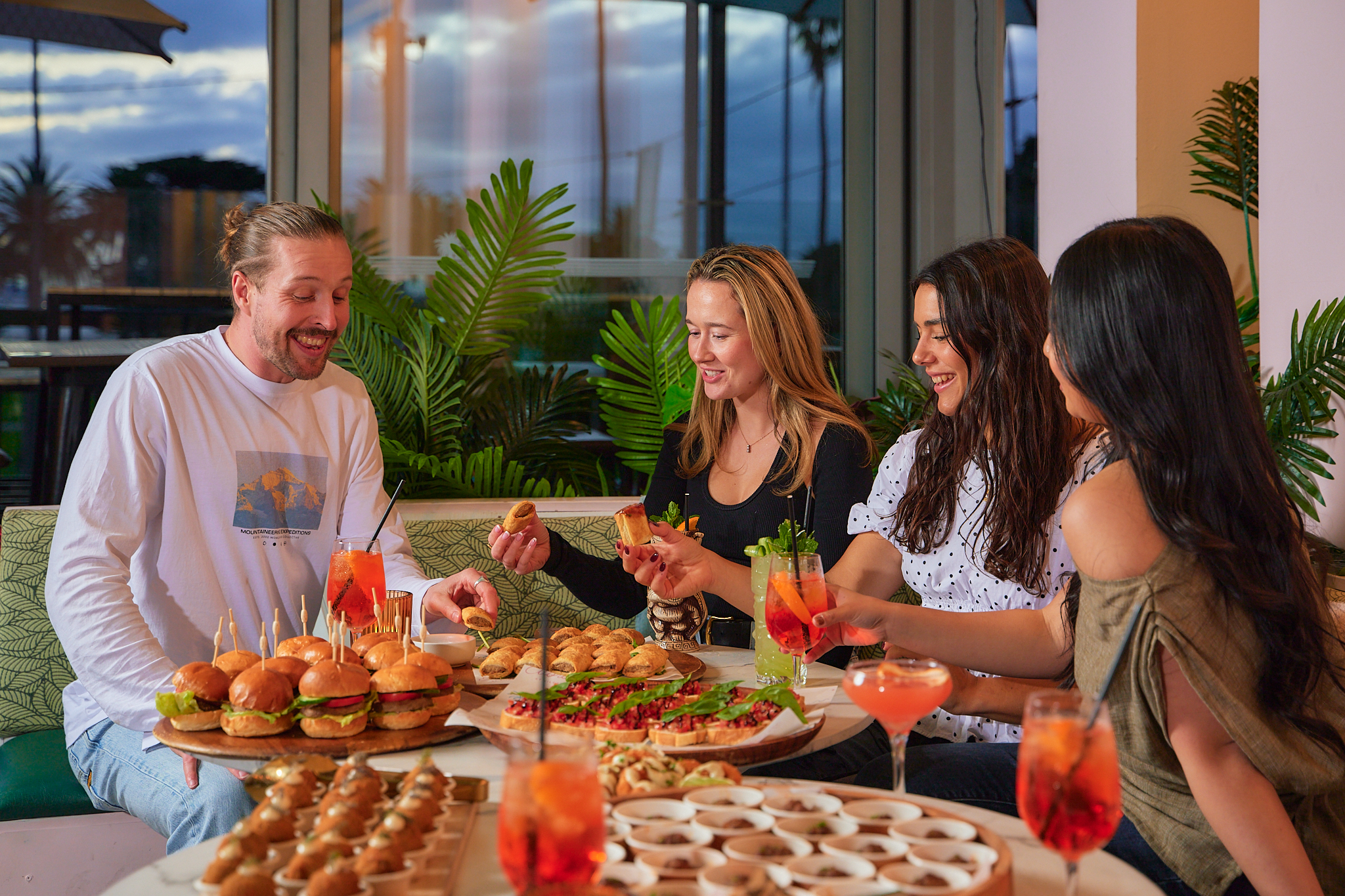
Plan a focused shoot around the reason to visit. Shoot the food, but don't stop there. The room, the people, the pace of service, the team and the little details are usually what help a guest decide if the place is for them.
Write the organic and paid versions of the message while the idea's fresh. A good paid asset isn't an organic post with money behind it. It needs a hook, the right audience and one action.
Output for the week: a small set of content with a job attached to every piece.
Week 3
Publish where it can do its job
Use organic to keep current guests close and build up an honest picture of what the place feels like. Put paid behind the messages that have a clear audience, a strong reason to visit and a simple booking path.
Keep the ask narrow. A post that wants you to book a table, watch a video, follow three accounts and enter a comp is asking too much. Pick the next useful step and make it obvious.
Output for the week: live content with one clear action, and a simple record of where the paid budget went.
Week 4
Learn before you make more
Review it with the venue team. Which story got people to act? Which service or offer moved? Did people hit the booking page and bail? Was the attention coming from the right locals? Was it a content problem, an offer problem or a problem with what happened after the click?
Keep the content that worked and the lessons that came with it. Bin the rest. The goal isn't more posts next month. It's fewer, better decisions.
Output for the week: one page of lessons that shapes the next cycle.
Organic and paid social do different jobs
They don't compete. They solve different parts of the same problem.
Organic keeps you recognisable
Organic is for people who already know the venue, or are deciding whether it's for them. It keeps the menu, the room, the people and the rhythm of the place visible, and gives staff and guests something worth sharing.
It works best when it's built around real service moments, not an obligation to post every day. Nobody needs a new gimmick at 9am. They need a set of stories that make a guest think ‘that's where we should go.’
Paid reaches the right people on purpose
Paid is how your best stories reach people who don't follow you yet, people who've engaged before, or everyone within your real catchment for a specific service or offer.
Before you spend a dollar, check three things:
The audience has a reason to care.
The creative makes the experience and the next step clear.
The page after the click delivers what the ad promised.
If one of those is missing, paid just makes the weak spot more expensive. For the paid layer itself, see how we approach Meta advertising for venues.
Before you publish anything: the restaurant demand checklist
Run this before the next shoot, campaign or content calendar gets signed off.
What service, audience or guest behaviour are we trying to move?
What's true about the venue that makes it worth choosing right now?
Would someone who's never visited understand what it feels like?
Are we showing more than food? People, service, room, atmosphere, occasion.
Does the message speak to one guest decision, or is it trying to cover every reason to visit?
Is the page after the click relevant, current and easy on a phone?
Is there one obvious action: book, enquire, buy a ticket, see the menu, join the list?
What would we need to see in four weeks to call it a win?
Who's reviewing it, and when?
If those don't have clear answers, don't make more content. Fix the job first.
What this looks like in practice
The framework is simple on purpose. The detail is different for every venue.
A neighbourhood restaurant with quiet midweek trade might need to turn a real date-night or after-work strength into a clear reason to book. A venue that's changed direction might need people to see the team, the room and the experience before the new positioning lands. A restaurant with strong first visits and weak return trade needs a better way to bring past guests back.
The common thread isn't a platform or a post format. It's getting the offer, the content, the audience and the booking path all pointing at the same decision.
Ellora St Kilda
Make the venue feel current before the booking
A clearer website, team-led content and paid activity that showed the people and personality behind the venue. The lesson: when a venue has changed, the online experience has to make that change obvious.
A repositioned venue story, new creative and a midweek offer, with campaigns that each had a specific booking job. The lesson: content gets useful when it points at a real commercial moment instead of trying to say everything at once.
How often should a restaurant post on social media?
As often as you can make content that's actually worth watching. A few strong feed posts a week, backed by real stories and paid where it has a job, beats daily posts with nothing to say.
Should every restaurant put money behind social content?
Not every post. Paid works when you've got a defined audience, a real reason to visit and a clear next step. If the offer or the booking path is a mess, fix that before you add budget.
What should we measure besides likes and followers?
The actions closest to a booking: booking clicks, enquiries, tickets, website visits from the right people, and cost per action on paid. Reach and followers are context, not the headline.
What if we don't have a new menu or event this month?
Look at what guests already value: the people, the room, a regular service moment, a good table for a particular occasion, the little things that make the place different. Make a real experience easier to choose. Don't invent a promo just to have something to post.
Can an in-house team use this?
Yes. It's built to make the conversation between operators, in-house marketers, photographers and agency partners more useful. The important bit is agreeing on the job, the next step and the evidence before anyone picks up a camera.
Restaurant demand, made practical
Give the next month of content a job to do
If the venue is better than its social, the fix is rarely ‘post more.’ It's usually a clearer problem, a truer reason to visit and a better path from attention to action. That's what we do at Tableside: strategy, content, paid creative and reporting, all pointed at the same job.
We work exclusively with hospitality venues and groups doing $3M-$1OM in revenue. Whether you're running a single high-performing venue or scaling multiple locations, we're built for operators who need serious marketing results, not just pretty posts
How is Tableside different from hiring a marketing manager?
You don't get one person trying to do everything. You get a full team of strategists, content creators, photographers, videographers, and ad specialists who've actually run venues. Agency firepower with operator instincts.
What's included in the Hospo Growth Engine?
Brand strategy, professional photo and video content, social media management, paid advertising, email and SMS campaigns, and monthly reporting tied to real revenue. Every campaign is built around our SEAT System, designed to fill seats and increase spend per head.
How quickly will I see results?
Most venues see measurable improvements within 30 to 60 days. We move fast because we don't need to learn your industry from scratch. The biggest wins compound over time as your brand, content, and paid campaigns build momentum.
Do you only work with Melbourne venues?
No. We work with venues across Australia. We have a national Creative Network of photographers and videographers on the ground, with strategy, ads, and account management handled by our core team.
What if I already have someone doing my marketing?
A lot of venues come to us because what they've been doing isn't moving the needle. We'll show you where the gaps are and either replace the existing setup or work alongside your team to handle strategy, content, and paid media.
Restaurant demand and social media: a four-week field guide
8 min read
/
October 25, 2026
Growth Lab field guide
A simple way to turn the next month of content, paid social and bookings into one plan. Pick the service that needs to move, give guests a real reason to come in, then use what happens to make next month better.
If you start the month asking ‘what should we post?’, you'll end it with a nicer-looking grid and the same trading problem.
Start somewhere more useful. Name the service, the audience or the behaviour that needs to move. A dead Wednesday dinner. Group bookings for the run into Christmas. A new lunch offer. A bar that does great weekends and never sees anyone twice. A venue that has changed and the locals haven't caught up.
That isn't a limit on the creative. It's what gives the creative a job. Once the commercial problem is clear, you can work out which reason to visit is actually true, who needs to see it, where they land and how you'll know if it worked.
Good restaurant marketing joins those decisions up. It doesn't ask one dish photo to do everything.
The demand map
1
Name the problem
Pick one thing that needs to change this month. Make it specific enough that you'd recognise the answer. ‘More awareness’ isn't a problem you can do anything with. ‘More Tuesday dinner bookings from couples nearby’ is.
2
Find the real reason to visit
Look for something already true about the venue: a menu change, the chef, a long lunch, a late-night ritual, a local event, a room that suits groups, a wet-weather dinner, an occasion, or a service moment people remember. Don't invent urgency the venue can't back up.
3
Give the guest one next step
A booking link, an event ticket, a menu, an enquiry form or an email sign-up. The post and the page it lands on should answer the same question. If the post is about a midweek set menu, the guest shouldn't have to dig through your homepage to find it.
4
Decide what counts as a result
Before anything goes live, agree on the number that matters: booking clicks, real enquiries, tickets sold, a bigger local remarketing audience, covers on the service you targeted, or repeat visits where your systems can show you.
The four-week restaurant demand plan
You don't need a quarter-long content deck to start. Run one proper cycle, learn from it, do the next one better.
Week 1
Choose the job
Sit down with the people who know the floor, the bookings and what's coming up. Look at the services that need help, the occasions guests already turn up for, and anything new that deserves attention.
Then check the path on a phone. Can someone understand the venue, see the offer and book or enquire without friction? If not, fix that before you pay for more eyeballs.
Output for the week: one problem, one audience, one reason to visit, one action you'll measure.
Week 2
Make proof, not filler
Plan a focused shoot around the reason to visit. Shoot the food, but don't stop there. The room, the people, the pace of service, the team and the little details are usually what help a guest decide if the place is for them.
Write the organic and paid versions of the message while the idea's fresh. A good paid asset isn't an organic post with money behind it. It needs a hook, the right audience and one action.
Output for the week: a small set of content with a job attached to every piece.
Week 3
Publish where it can do its job
Use organic to keep current guests close and build up an honest picture of what the place feels like. Put paid behind the messages that have a clear audience, a strong reason to visit and a simple booking path.
Keep the ask narrow. A post that wants you to book a table, watch a video, follow three accounts and enter a comp is asking too much. Pick the next useful step and make it obvious.
Output for the week: live content with one clear action, and a simple record of where the paid budget went.
Week 4
Learn before you make more
Review it with the venue team. Which story got people to act? Which service or offer moved? Did people hit the booking page and bail? Was the attention coming from the right locals? Was it a content problem, an offer problem or a problem with what happened after the click?
Keep the content that worked and the lessons that came with it. Bin the rest. The goal isn't more posts next month. It's fewer, better decisions.
Output for the week: one page of lessons that shapes the next cycle.
Organic and paid social do different jobs
They don't compete. They solve different parts of the same problem.
Organic keeps you recognisable
Organic is for people who already know the venue, or are deciding whether it's for them. It keeps the menu, the room, the people and the rhythm of the place visible, and gives staff and guests something worth sharing.
It works best when it's built around real service moments, not an obligation to post every day. Nobody needs a new gimmick at 9am. They need a set of stories that make a guest think ‘that's where we should go.’
Paid reaches the right people on purpose
Paid is how your best stories reach people who don't follow you yet, people who've engaged before, or everyone within your real catchment for a specific service or offer.
Before you spend a dollar, check three things:
The audience has a reason to care.
The creative makes the experience and the next step clear.
The page after the click delivers what the ad promised.
If one of those is missing, paid just makes the weak spot more expensive. For the paid layer itself, see how we approach Meta advertising for venues.
Before you publish anything: the restaurant demand checklist
Run this before the next shoot, campaign or content calendar gets signed off.
What service, audience or guest behaviour are we trying to move?
What's true about the venue that makes it worth choosing right now?
Would someone who's never visited understand what it feels like?
Are we showing more than food? People, service, room, atmosphere, occasion.
Does the message speak to one guest decision, or is it trying to cover every reason to visit?
Is the page after the click relevant, current and easy on a phone?
Is there one obvious action: book, enquire, buy a ticket, see the menu, join the list?
What would we need to see in four weeks to call it a win?
Who's reviewing it, and when?
If those don't have clear answers, don't make more content. Fix the job first.
What this looks like in practice
The framework is simple on purpose. The detail is different for every venue.
A neighbourhood restaurant with quiet midweek trade might need to turn a real date-night or after-work strength into a clear reason to book. A venue that's changed direction might need people to see the team, the room and the experience before the new positioning lands. A restaurant with strong first visits and weak return trade needs a better way to bring past guests back.
The common thread isn't a platform or a post format. It's getting the offer, the content, the audience and the booking path all pointing at the same decision.
Ellora St Kilda
Make the venue feel current before the booking
A clearer website, team-led content and paid activity that showed the people and personality behind the venue. The lesson: when a venue has changed, the online experience has to make that change obvious.
A repositioned venue story, new creative and a midweek offer, with campaigns that each had a specific booking job. The lesson: content gets useful when it points at a real commercial moment instead of trying to say everything at once.
How often should a restaurant post on social media?
As often as you can make content that's actually worth watching. A few strong feed posts a week, backed by real stories and paid where it has a job, beats daily posts with nothing to say.
Should every restaurant put money behind social content?
Not every post. Paid works when you've got a defined audience, a real reason to visit and a clear next step. If the offer or the booking path is a mess, fix that before you add budget.
What should we measure besides likes and followers?
The actions closest to a booking: booking clicks, enquiries, tickets, website visits from the right people, and cost per action on paid. Reach and followers are context, not the headline.
What if we don't have a new menu or event this month?
Look at what guests already value: the people, the room, a regular service moment, a good table for a particular occasion, the little things that make the place different. Make a real experience easier to choose. Don't invent a promo just to have something to post.
Can an in-house team use this?
Yes. It's built to make the conversation between operators, in-house marketers, photographers and agency partners more useful. The important bit is agreeing on the job, the next step and the evidence before anyone picks up a camera.
Restaurant demand, made practical
Give the next month of content a job to do
If the venue is better than its social, the fix is rarely ‘post more.’ It's usually a clearer problem, a truer reason to visit and a better path from attention to action. That's what we do at Tableside: strategy, content, paid creative and reporting, all pointed at the same job.
We work exclusively with hospitality venues and groups doing $3M-$1OM in revenue. Whether you're running a single high-performing venue or scaling multiple locations, we're built for operators who need serious marketing results, not just pretty posts
How is Tableside different from hiring a marketing manager?
You don't get one person trying to do everything. You get a full team of strategists, content creators, photographers, videographers, and ad specialists who've actually run venues. Agency firepower with operator instincts.
What's included in the Hospo Growth Engine?
Brand strategy, professional photo and video content, social media management, paid advertising, email and SMS campaigns, and monthly reporting tied to real revenue. Every campaign is built around our SEAT System, designed to fill seats and increase spend per head.
How quickly will I see results?
Most venues see measurable improvements within 30 to 60 days. We move fast because we don't need to learn your industry from scratch. The biggest wins compound over time as your brand, content, and paid campaigns build momentum.
Do you only work with Melbourne venues?
No. We work with venues across Australia. We have a national Creative Network of photographers and videographers on the ground, with strategy, ads, and account management handled by our core team.
What if I already have someone doing my marketing?
A lot of venues come to us because what they've been doing isn't moving the needle. We'll show you where the gaps are and either replace the existing setup or work alongside your team to handle strategy, content, and paid media.